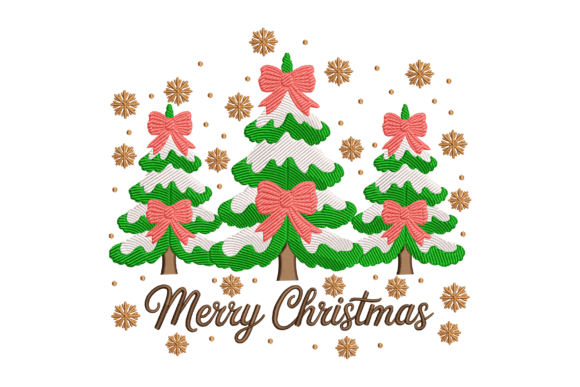
Merry Christmas Trees: A Designer's Hands-On Review
As someone who designs embroidered gifts day in and day out, I approach every new pattern with a mix of excitement and practical scrutiny. Before I ever stitch a design onto a real product destined for a customer, I put it through a rigorous test. Today, that test is for Merry Christmas Trees. I’m imagining it already stitched onto a soft baby blanket, a crisp kitchen towel, or a keepsake pillow. My goal is to see if this design holds up not just as a digital embroidery file, but as a finished, personalized gift that feels special enough to give and treasured enough to keep.
The First Stitch: Emotional Impact and Visual Charm
Right from the preview, Merry Christmas Trees sets a mood. It feels classic and sweet, with a handmade charm that speaks directly to the heart of the holiday season. There’s an elegance in its simplicity, yet it carries a playful warmth. This isn’t a stark, modern graphic; it’s a design that whispers of cozy firesides and family traditions. That emotional appeal is its greatest asset. For a customer looking for a meaningful gift—perhaps a first Christmas ornament for a newborn, or a commemorative pillow for a couple’s first holiday together—this design provides an instant, gentle connection. It feels both seasonal and timeless, which is a perfect combination for a keepsake.
A World of Applications: From Nursery to Kitchen
The versatility of a good embroidery design is key for small businesses. Merry Christmas Trees opens up a wonderful range of product possibilities. Let’s walk through some real-case scenarios.
For baby embroidery, it would be beautiful on a nursery blanket, a delicate wall hanging, or even a special holiday bib. The sweet mood aligns perfectly with the tenderness of a baby’s first Christmas. For wedding gifts, imagine it embroidered on the corner of a luxurious pillow cover, perhaps with the couple’s new last name or the year added—it becomes a romantic, yearly decorative piece. As a family keepsake, it could adorn a custom tote bag for holiday shopping trips or an apron for baking seasonal cookies together.
Its application for personalized towels, pillow covers, and aprons is straightforward and highly marketable at craft fairs or in Etsy listings. For blanket embroidery, it offers a focal point that’s decorative without being overwhelming. The design also lends itself beautifully to digital product sellers; creating a printable mockup for customers to preview how it would look on their chosen item enhances trust and engagement before the stitch even begins.
Where to Exercise a Bit More Care
While the design is charming, any experienced embroiderer knows that not all fabrics and contexts are equal. Based on its style, I would advise paying close attention in a few areas. If the design includes any small lettering within the phrase "Merry Christmas Trees," test that thoroughly on scrap fabric first. The same goes for any delicate details in the tree outlines or decorations.
Textured fabrics like thick terrycloth towels or nubby blankets require the right stabilizer and perhaps adjusted stitch density to keep the design crisp. Stretchy baby clothes are a tricky canvas; always use a cut-away stabilizer and consider a slightly larger hoop size for stability. Embroidering on curved surfaces like the brim of a hat or a stuffed animal requires careful hooping and possibly a different file orientation.
If using the design on dark fabric, thread color contrast is paramount—a mockup on both light and dark backgrounds is essential for your product photography. Finally, for any product that will need frequent washing—like kitchen linens or baby items—ensure your stitch density and thread choice are robust enough to withstand the laundry cycle without fraying.
The Business of Stitching: Giftability and Perceived Value
When I evaluate a design for a shop, I’m really evaluating its giftability. Merry Christmas Trees scores highly here. It inherently feels like a gift. It’s not generic; it feels thoughtful and specific to a moment in time. That boosts the perceived value of the finished product immensely. A customer isn’t just buying a towel; they’re buying a cherished holiday towel.
This emotional connection fosters customer trust. They see the handmade quality and the care in the design, which translates to trust in your brand as a maker. For your product photography, the design provides a strong, recognizable visual centerpiece that tells a story, which increases buyer engagement in your online listings. It’s a design that people want to share and give, making it a powerful tool for repeat business and word-of-mouth promotion.
Practical Notes from the Hoop
Before you run this machine embroidery design for a real order, here’s my checklist from the testing bench. These steps save time, materials, and customer disappointment.
- Test on Scrap Fabric: Always stitch a complete sample on a scrap of the actual fabric you plan to use. This reveals how the stitch density interacts with the fabric texture.
- Check Thread Color Contrast: View your thread colors against both light and dark background mockups. The holiday palette might need tweaking for optimal pop.
- Confirm Hoop Size: The design size will dictate the necessary hoop. Ensure your chosen hoop works comfortably with your final product—a large blanket might need a different approach than a small pillow corner.
- Review Stabilizer Choice: This is critical. A thick towel needs a sturdy stabilizer; a delicate baby blanket might need a lighter, tear-away type. Match it to the fabric.
- Compare Mockups: Generate digital mockups on light and dark fabrics. This not only helps your testing but is a superb sales tool for custom embroidery previews.
- Check Small Details After Stitching: After your test run, inspect every small element. Are any stitches too close or too delicate? Adjust before the final run.
- Confirm Commercial Licensing: This is paramount. Before selling any finished product, verify the license terms of the digital embroidery file. Ensure your use as an Etsy seller or at a craft fair is covered under its commercial embroidery policy.
A Final Thought Before the Needle Drops
Merry Christmas Trees is more than just a pattern. It’s a vessel for memory and celebration. As a professional, I see its potential to become a beloved part of someone’s holiday story, whether stitched onto a embroidered towel in a busy kitchen or a blanket embroidery in a quiet nursery. Its charm is clear, its applications are wide, and with careful, professional preparation, it can elevate your range of small shop products. My advice is to embrace its warmth, but respect the craft. Do your tests, confirm your settings, and then stitch with confidence. The result will be a personalized gift that truly feels like the season wrapped in thread.